
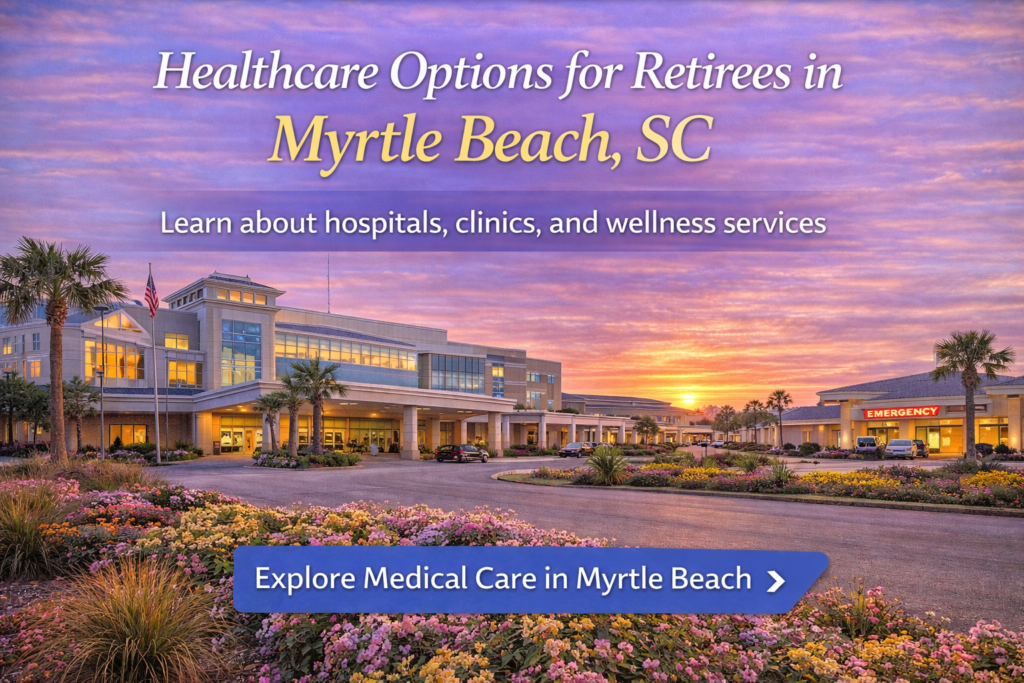
Choosing a retirement destination isn’t just about sun and sand. For many older adults, access to reliable healthcare is a decisive factor. Myrtle Beach offers not only warm weather and low taxes but also a robust network of hospitals, clinics, and specialists. The Grand Strand includes multiple health systems, urgent care centers, and wellness programs that support long‑term retirement planning.
A major advantage of retiring in Myrtle Beach is the availability of hospital systems spanning the region. According to local relocation guides, the area is served by five hospitals and numerous medical facilities. The Myrtle Beach Area Chamber of Commerce identifies four primary hospital systems—Conway Medical Center, Grand Strand Health, McLeod Health, and Tidelands Health—which operate multiple hospitals and satellite facilities for urgent care and specialty services. These systems provide comprehensive medical care from routine check‑ups to complex surgeries.
Grand Strand Health operates several hospitals and emergency rooms across the coast. Its flagship, Grand Strand Medical Center, is an acute care hospital recognized by the Joint Commission for programs including chest pain, knee and hip replacement, sepsis, and stroke rehabilitation. The hospital offers the only cardiac surgery and neurosurgery programs in Horry and Georgetown counties, as well as a pediatric intensive care unit and a designated Level 1 adult trauma center. Freestanding emergency rooms in the North Strand, Carolina Forest, and South Strand communities provide 24‑hour care. For retirees, this means quick access to specialists and emergency services when needed.
Tidelands Health is the largest healthcare provider in the region and operates several hospitals and more than 60 outpatient locations. Tidelands Waccamaw Community Hospital offers a wide range of inpatient and outpatient services, including 24‑hour emergency care, critical care, and surgical facilities. Tidelands Georgetown Memorial Hospital has served the area since 1950 and is certified in joint replacement and spine surgery. Tidelands Health also provides a rehabilitation hospital for patients recovering from strokes, joint replacements, or complex procedures. Retirees benefit from telehealth services and regular wellness fairs that offer free screenings and health resources.
McLeod Health’s facilities cover the Grand Strand, Pee Dee, and Brunswick County in North Carolina. McLeod Health Seacoast is a 155‑bed acute care hospital with more than 30 specialties and over 200 physicians. McLeod Health Carolina Forest is a growing 43‑acre campus that houses physician practices and outpatient services, including a 24‑hour emergency room. McLeod Health Loris, a 50‑bed hospital, offers general surgery, women’s services, emergency care, critical care, urology, and therapy services. Together, these facilities ensure that retirees across the Grand Strand have access to specialized care close to home.
Conway Medical Center is the oldest hospital in Horry County. Established in 1928, it operates a 222‑bed hospital and numerous satellite offices. The center is open 24 hours a day and provides emergency services, inpatient care, and a range of specialty clinics. Its longstanding presence in the region underscores the depth of healthcare options available to residents.
Beyond the major hospital systems, Myrtle Beach offers a variety of clinics, primary care practices, and specialized providers. Senior primary care centers and geriatric physicians serve the area, and there are specialty programs in cardiology, orthopedics,s and rehabilitation. Community wellness initiatives, such as senior health fairs and telehealth consultations, make it easy for retirees to stay on top of preventive care. The combination of hospital‑based services and outpatient clinics means that residents can access everything from routine check‑ups to advanced procedures without leaving the Grand Strand.
Active adult communities often attract retirees who want convenience along with lifestyle amenities. These neighborhoods are strategically located across the region, placing residents within a short drive of major hospitals and urgent care centers. For example:
These communities also typically organize health‑focused social clubs, walking groups, and fitness classes, supporting residents’ well‑being beyond the local hospital network.
When evaluating healthcare options in Myrtle Beach, retirees should consider proximity to hospitals, availability of specialists, and insurance coverage. Many of the region’s hospital systems are accredited and award‑winning; they host heart, orthopedics, and stroke programs that rival those of larger metropolitan areas. Telehealth services and wellness fairs offer convenient access to care. Insurance premiums may vary depending on proximity to the coast, so it’s important to research coverage for hurricane‑prone areas and check whether your plan includes the hospital systems you’re most likely to use.
Myrtle Beach’s healthcare infrastructure provides a strong foundation for long‑term retirement planning. With multiple hospital systems, numerous specialists, and community wellness programs, retirees can feel confident that their health needs will be met. Combined with the area’s affordability and coastal lifestyle, the Grand Strand offers peace of mind for those entering their next chapter.
Finding the right home is only part of planning your retirement. Understanding the local healthcare landscape is just as important. If you’d like help touring 55‑plus communities near top hospitals or need guidance on selecting a neighborhood that meets your health and lifestyle needs, let’s connect.