
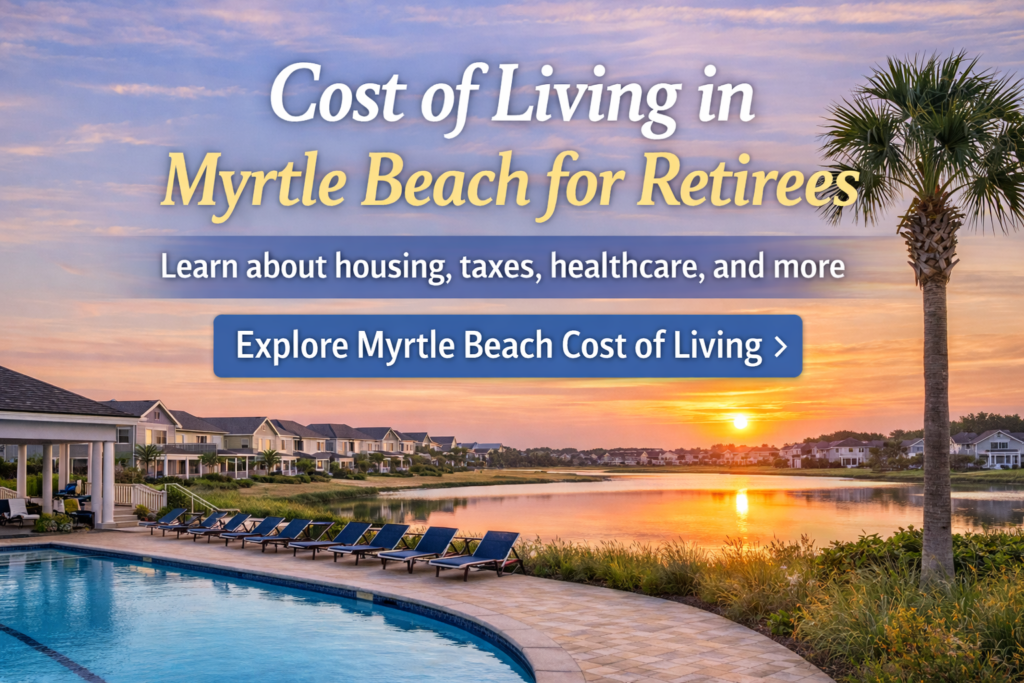
Relocating to Myrtle Beach is a dream for many retirees seeking a mild climate, an active coastal lifestyle, and an affordable place to call home. One of the most common questions asked by retirees is whether Myrtle Beach is affordable compared with other retirement destinations. This article looks at the cost of living in Myrtle Beach, including housing prices, property taxes, utilities, healthcare, and HOA fees, to help you assess whether your retirement income can stretch further on the Grand Strand.
Myrtle Beach draws retirees from across the United States because it combines low taxes, moderate living costs, and a vibrant community. According to the Myrtle Beach Area Chamber of Commerce, South Carolina does not tax Social Security benefits and offers a generous retirement‑income deduction. Property taxes are very low – they are based on 4 % to 6 % of a home’s market value, and senior homeowners qualify for a homestead exemption. City residents receive an 88 % property tax credit. These factors lower the overall cost of living, which explains why the area continues to grow.
The climate is another draw. Mild winters and sunny summers allow year‑round golfing, pickleball, and beach walks. The region offers over 60 miles of uninterrupted shoreline and 90 golf courses. A strong network of cultural organizations, religious groups, and volunteer opportunities provides retirees with plenty of ways to stay active.
Housing is usually the largest component of a retiree’s budget. As of 2025, the median home price in Myrtle Beach is around $320,000, which is significantly lower than prices in other East Coast beach towns. This affordability is one of the reasons retirees and remote workers have been moving to the Grand Strand.
Right Find Homes’ retirement guide notes that Myrtle Beach’s housing costs are roughly 23 % lower than the national average. The area offers a range of options, from affordable resale homes in established neighborhoods to higher‑end new construction in amenity‑rich communities. Single‑level floor plans and primary suites on the first floor are common, making homes attractive to retirees.
South Carolina’s tax system is friendly to retirees. The state does not tax Social Security benefits. For homeowners over 65, the homestead exemption excludes the first $50,000 of a primary residence’s fair market value from property taxes. Right Find Homes highlights that the average effective property tax rate in Myrtle Beach is about 0.52 %. Combined with a cost‑of‑living index of 89.3 (about 11 % lower than the national average), these tax breaks help retirees stretch their income.
In addition, retirees may deduct up to $15,000 of retirement income from their South Carolina taxable income. These benefits make Myrtle Beach more affordable than nearby states such as North Carolina or Florida, which have higher cost‑of‑living indices.
For most households in Myrtle Beach, monthly utility bills (electricity, water, and gas) range from $180 to $220 per month. Internet plans average about $80 per month, with bundled cable and streaming services available. These costs have remained relatively stable compared to national averages.
Healthcare access is strong in the Grand Strand. Myrtle Beach has a growing number of clinics and senior‑friendly medical centers. Individual health insurance premiums average $400 to $450 per month, while family plans run $1,100 to $1,300 per month. Co‑payments for doctor visits remain low at around $30. The Myrtle Beach Chamber notes that the area provides award‑winning medical centers and extensive in‑home healthcare services.
Most 55+ communities in the Myrtle Beach area have a Homeowners’ Association (HOA) that collects monthly or quarterly dues. These fees cover shared amenities, common‑area maintenance, trash service, and often lawn care. In communities with resort‑style amenities, fees tend to be higher because they maintain pools, clubhouses, fitness centers, and organized events. More modest neighborhoods offer lower fees but fewer facilities.
Spring Forest, located in Murrells Inlet, is a gated community of about 126 single‑family homes. Residents enjoy a gated entrance, pool, large community center, and on-site RV and boat storage. The community is golf‑cart accessible to Garden City Pier and the Atlantic Ocean. Spring Forest is known for low HOA dues, making it one of the more affordable 55+ neighborhoods for retirees concerned about monthly fees.
Cresswind, situated in the Market Common district, offers around 400 single‑family homes built between 2013 and 2022. Residents enjoy a 12,500‑square‑foot clubhouse with a fitness center, arts studio, demonstration kitchen, and library. Outdoor amenities include a resort‑style pool, pickleball and tennis courts, bocce ball, walking path,s and an amphitheater. The professionally managed HOA organizes events such as yoga, cooking classes, and social clubs. HOA fees here are higher than in simpler communities because they cover extensive amenities and social programming. Buyers should evaluate whether these features justify the dues.
Seasons at Prince Creek West in Murrells Inlet is a gated community of approximately 446 one‑story homes ranging from 1,600 to 2,900 square feet. The centerpiece is a 29,000‑square‑foot clubhouse, with indoor and outdoor pools, saunas, tennis and bocce courts, and miles of walking and biking trails. A full‑time activities director coordinates clubs and classes. HOA dues here reflect the broad range of amenities and services; in return, residents avoid separate gym or club memberships.
Del Webb at Grande Dunes is known for upscale homes and exceptional amenities. It offers a resort clubhouse with indoor and outdoor pools, a fitness center, pickleball and tennis courts, a community garden, and a lifestyle director. Residents also have access to the Grande Dunes Ocean Club, which features oceanfront dining and cabanas. Homes range from two to four bedrooms. HOA fees are higher because they support luxury facilities and exclusive beach access. Buyers seeking a highly social, resort‑style retirement should factor these fees into their budget.
Lakeside Crossing in Conway features manufactured homes set around a lake. The community emphasizes affordability and includes amenities such as a clubhouse, fitness center, heated outdoor pool, catch‑and‑release lake, and social events. HOA dues cover lawn care and access to amenities; they are generally lower than in Del Webb or Cresswind but higher than in Spring Forest. Lakeside Crossing suits retirees seeking a lower-cost entry into a 55+ community while still enjoying a structured environment.
Is Myrtle Beach affordable for retirees? For many, the answer is yes. A median home price of around $320,000, a cost‑of‑living index about 11 % below the national average, and low property taxes create a financial advantage. No state tax on Social Security and generous retirement deductions further support retirees’ budgets. Communities like Spring Forest offer low HOA fees, while Cresswind, Seasons, and Del Webb provide resort‑style amenities that justify higher dues.
Ultimately, the best community depends on your lifestyle priorities. Evaluate how amenities, HOA fees, and location align with your needs. Myrtle Beach’s combination of affordability, coastal beauty, and social opportunities makes it a compelling choice for your retirement years.
Interested in learning more about Myrtle Beach 55+ communities or want to compare the cost of living in specific neighborhoods? Let us help you find the best fit for your lifestyle.